

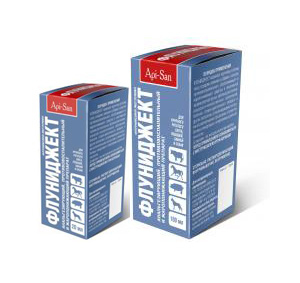

Fluniject
| Species | Cattle, horses, swine, dogs. |
|---|---|
| Composition |
Fluniject – injectable solution. Each ml of Fluniject injectable contains: flunixin meglumine - 83 mg (equivalent to 50 mg of flunixin) and, as excipients, sodium salicylate - 8 mg, sodium hydroxide - 40 mg, benzyl alcohol - 10 mg, and water for injections up to 1 ml. |
| Indications |
Fluniject is administered to cattle, horses, pigs, and dogs as an anti-inflammatory, analgesic, and antipyretic in the comprehensive treatment of respiratory and ophthalmic diseases, obstetric and gynecological conditions, musculoskeletal disorders, and other pathologies involving acute inflammation, pain syndromes, and hyperthermia of various etiologies. |
| Dosage and method of administration |
Fluniject is administered parenterally to animals once daily, as follows: Calves (for respiratory diseases, gynecological conditions, and other pathologies accompanied by inflammatory processes): intravenously or intramuscularly, 2 ml per 45 kg of body weight (2.2 mg/kg flunixin) until clinical improvement is observed, but no more than 5 consecutive administrations. Pigs (for respiratory diseases, gynecological conditions, MMA syndrome): deep intramuscular injection in the side of the neck, 2 ml per 45 kg of body weight (2.2 mg/kg flunixin), with a repeat dose after 24 hours if necessary. Dogs (for inflammation control and pain relief in the treatment of musculoskeletal diseases, as an antipyretic): intravenously or intramuscularly, 0.2 ml per 10 kg of body weight (1 mg/kg flunixin) until general condition improves, but no more than 3 consecutive administrations. Horses: For musculoskeletal disorders: intravenously, 1 ml per 45 kg of body weight (1.1 mg/kg flunixin) once daily until clinical improvement, but no more than 5 consecutive administrations. For relief of visceral pain associated with colic: 1 ml per 45 kg of body weight (1.1 mg/kg flunixin), with a repeat dose if needed after 24 hours. In cases of endotoxemia, septic shock, and other diseases associated with circulatory disorders in the gastrointestinal tract, as well as an antipyretic in bacterial and viral infections following surgical procedures: 0.2 ml per 45 kg of body weight (0.22 mg/kg flunixin) every 6-8 hours until clinical improvement, but no more than 3 consecutive administrations. To avoid potential pain at the injection site, no more than 5 ml should be administered in one injection site for large animals and no more than 2.5 ml for small animals. In cases of overdose, symptoms of renal disease, gastrointestinal hemorrhages, vomiting, acidosis, and elevated transaminase levels may occur. In such cases, detoxification agents and symptomatic therapy should be administered. |
| Contraindications |
Contraindications for the administration of this product in animals include hypersensitivity to the drug, gastric and duodenal ulcers, hemorrhagic syndrome, acute renal, hepatic, or cardiac failure, and hypovolemia (except in cases of endotoxemia or septic shock). The product should not be used in pregnant females, young animals under 1.5 months of age, or piglets weighing less than 6 kg. Intra-aortal administration and use in cats are strictly prohibited. |
| Waiting period |
Slaughtering of animals for human consumption after the last administration is permitted after the following withdrawal periods: Pigs – 28 days Horses – 8 days Cattle: Milk from dairy cattle can be used for human consumption no earlier than 60 hours after the last administration. Milk obtained before this period, if heat-treated, can be used as animal feed. |
| Release form | Fluniject is produced in glass vials of 10, 20, 50, 100, 200, 250, and 500 ml, sealed with rubber stoppers and aluminum caps. The vials are packaged in cardboard boxes along with instructions for use. |
| Storage conditions |
The product should be stored in the manufacturer's sealed container, in a dark, dry place, away from food and animal feed, at a temperature between +5°C and +25°C. During storage, sediment formation may occur, which disappears upon shaking the vial. |
| Shelf life |
Shelf life: 3 years from the date of manufacture. After first opening, the product must be used within 28 days. Do not use after the expiration date indicated on the packaging. |