

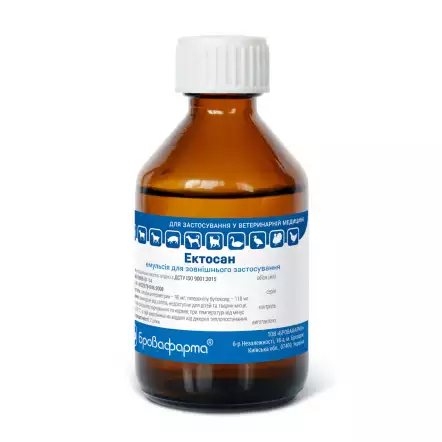

Ectosan
| Species | Cattle, sheep. |
|---|---|
| Composition | Ectosan - pale yellow emulsion, with a pleasant, specific smell. 1 ml of the preparation contains active substances: alphamethrin - 85 mg, piperonyl butoxide - 115 mg and adjuvants. |
| Indications | Ectosan in the form of aqueous solutions is used in cattle and sheep in case of invasions with ectoparasites, sensitive to the active substances of the preparation. |
| Dosage and method of administration |
Animal processing solutions are used by sprinkling with different devices that can create fine dispersion. In the case of visible skin conditions (psoroptosis, sarcoptosis, etc.), the solution is rubbed into them with the help of a brush, for 40-50 sec. For small animals (sheep) bathing is more effective. The sheep are bathed in specially arranged places, after shearing.
In the treatment of animals affected by acariform ticks, after 9-12 days the processing is repeated. |
| Contraindications | Exhausted, sick animals and pregnant females in the last week are not subject to processing. |
| Waiting period | Meat - 14 days from the last processing. The carcasses obtained before the expiry of the deadline are given in the production of meat-and-bone meal or in the food of carnivores. Milk - 0 days. |
| Release form | 1 glass ampoule; 5; 10 ml; glass or polymer vials of 10; 20; 50; 100; two hundred; 500 and 1000 ml; 2.5 l polymer canisters; 5 and 10 liters. |
| Storage conditions | Store in a dark place, separate from food and feed, at T°C -20°C + 25°C, in places inaccessible to children. |
| Shelf life | 2 years from the date of production. Do not use after the expiry date indicated on the packaging. |